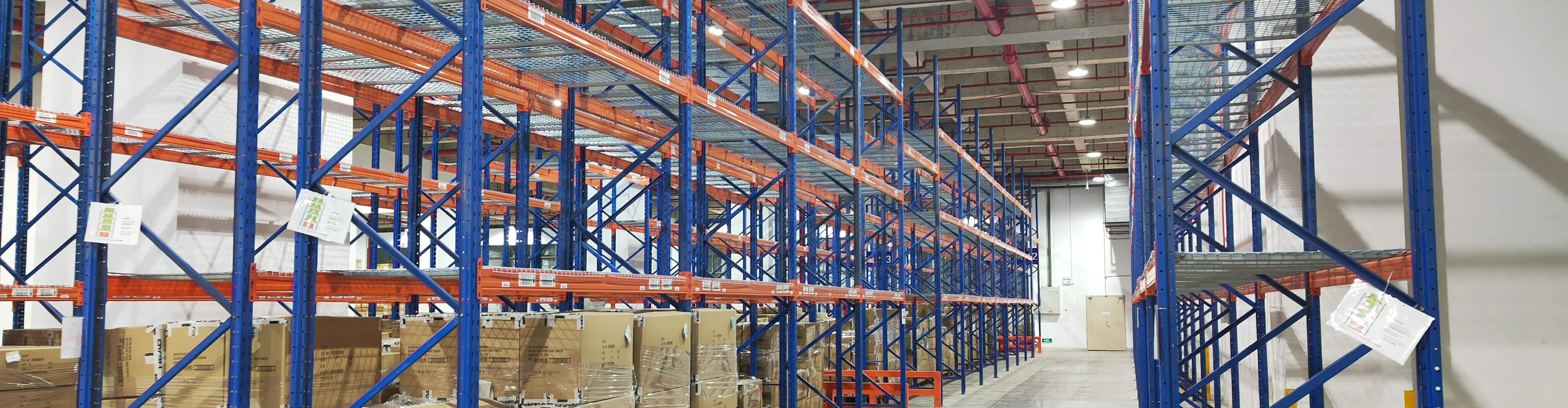
Heavy duty warehouse racking is designed to store palletized goods safely, use vertical space efficiently, and support consistent forklift handling in demanding warehouse environments. For most operations, the right system is not simply the one with the highest load capacity. It is the one that matches pallet type, stock rotation, aisle layout, handling equipment, floor condition, and future growth plans.
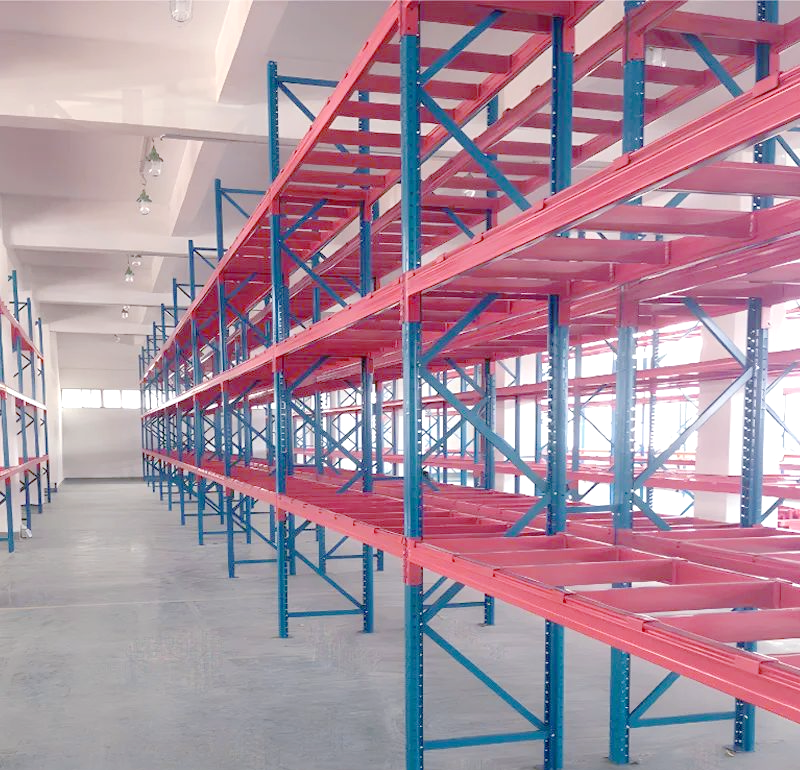
When businesses evaluate pallet storage, they usually want three things at the same time: good space utilization, reliable access to inventory, and safe day-to-day operation. A well-planned heavy duty warehouse racking layout can improve picking flow, reduce product damage, and make better use of available cube space. A poor layout can create congestion, limit selectivity, and increase the risk of rack impact or overloaded beam levels.
What Is Heavy Duty Warehouse Racking?
Heavy duty warehouse racking refers to industrial storage systems built for palletized loads, higher weight capacities, and regular mechanical handling by forklifts or reach trucks. These systems are commonly used in distribution centers, manufacturing plants, cold storage facilities, spare parts warehouses, and wholesale operations.
The basic structure usually includes uprights, beams, bracing, base plates, and anchoring to the floor. Depending on the system type, it may also include decking, pallet supports, row spacers, guide rails, safety barriers, and rack protection accessories.
In practical terms, heavy duty warehouse racking helps a warehouse store more goods vertically while keeping pallet handling organized. The right design depends on how many SKUs are stored, how often pallets move, whether stock rotation is FIFO or LIFO, and how much direct access is needed to each pallet.
Why Heavy Duty Warehouse Racking Matters for Pallet Storage Efficiency
Efficient pallet storage is not just about fitting more pallets into the building. It also depends on how quickly operators can put away, retrieve, count, and replenish stock without creating delays or safety issues. Heavy duty warehouse racking supports efficiency when it is matched to the real workflow.
- Better use of building height: Vertical storage reduces pressure on floor space.
- Improved pallet organization: Defined storage locations make inventory control easier.
- Faster forklift travel paths: A logical layout can reduce unnecessary movement.
- Safer handling conditions: Proper beam spacing and aisle planning help operators place pallets accurately.
- Scalability: Many systems can be extended or reconfigured as stock profiles change.
However, storage density and operational speed often work against each other. A denser system may reduce immediate access to every pallet. A highly selective system may use more aisle space. That trade-off should be decided early in the planning stage.
Common Types of Heavy Duty Warehouse Racking for Pallets
Selective Pallet Racking
Selective racking is the most common form of heavy duty warehouse racking because it provides direct access to each pallet position. It suits warehouses with many SKUs, frequent order movement, and a need for simple stock visibility.
This system is usually a practical choice when selectivity matters more than maximum storage density. It is also easier to inspect, reconfigure, and integrate into mixed operations that combine full-pallet storage with case picking.
Its limitation is space efficiency. Because every row needs aisle access, selective racking generally stores fewer pallets per square meter than denser systems.
Drive-In and Drive-Through Racking
Drive-in and drive-through systems increase storage density by reducing the number of aisles. Forklifts enter the rack structure to place or retrieve pallets on support rails.
These systems can work well for large volumes of the same SKU and slower-moving stock with fewer product lines. They are less suitable when many SKUs require immediate access or when stock rotation control is critical.
Because forklifts operate inside the structure, impact risk and maintenance attention are important considerations. Operators need good visibility, consistent pallet quality, and disciplined handling practices.
Push Back Racking
Push back heavy duty warehouse racking stores pallets on inclined carts or rails, allowing multiple pallets deep per lane. It offers higher density than selective racking while maintaining relatively fast access compared with drive-in systems.
It is often used where SKU count is moderate and LIFO inventory flow is acceptable. Buyers should evaluate pallet consistency carefully, since uneven or damaged pallets may not perform well in gravity-assisted systems.
Pallet Flow Racking
Pallet flow systems use roller lanes so pallets move from the loading side to the picking side by gravity. This supports FIFO stock rotation and is often used for fast-moving products, batch control, or date-sensitive inventory.
The advantage is efficient replenishment and picking separation. The downside is greater planning complexity, higher system cost, and the need for good pallet quality and controlled loading practices.
Cantilever and Other Specialized Systems
Not every warehouse storing heavy goods should use standard pallet racking for all inventory. Long, awkward, or non-palletized items may be better stored on cantilever racking or other specialized systems. A mixed-storage approach is often more efficient than forcing every product into one rack format.
How to Choose the Right Heavy Duty Warehouse Racking System
Choosing heavy duty warehouse racking should start with operating reality, not catalog dimensions. A system that looks efficient on paper can become difficult to use if pallet sizes vary, forklifts need wide turning space, or order profiles change often.
1. Review Your Pallet and Load Profile
Start with the actual loads being stored:
- Pallet dimensions and overhang
- Maximum pallet weight
- Load stability and packaging type
- Consistency of pallet quality
- Whether loads are full pallet, mixed pallet, or partial pallet
If pallets are frequently damaged, undersized, or inconsistent, that affects beam spacing, support requirements, and suitability for denser systems such as push back or pallet flow.
2. Understand SKU Mix and Stock Rotation
A warehouse with many SKUs and regular order picking usually benefits from direct pallet access. A warehouse storing large quantities of the same item may prioritize density instead.
Also consider whether inventory should move on a FIFO or LIFO basis. This decision can eliminate some systems early and simplify planning.
3. Match the Rack to Forklift Handling
Heavy duty warehouse racking must work with the equipment actually used on site. Forklift type affects aisle width, lift height, turning radius, and placement accuracy. Reach trucks, counterbalance forklifts, and very narrow aisle equipment all create different layout requirements.
Ignoring truck specifications is a common planning mistake. If aisles are too narrow or lift heights too aggressive for the equipment and operator skill level, productivity and safety both suffer.
4. Check Clear Height and Building Constraints
Available roof height does not automatically equal usable storage height. Buyers should account for lighting, sprinklers, ventilation, column interference, dock zones, and required operating clearances.
In some buildings, adding more levels to heavy duty warehouse racking looks attractive but creates slower handling because lift cycles become longer. More vertical storage is only helpful if it remains practical to operate.
5. Evaluate Floor Condition and Load Distribution
Floor flatness, slab condition, and point loading matter. Heavy duty warehouse racking transfers load to the floor through upright frames and base plates. If the floor is uneven, damaged, or not suitable for the intended load pattern, installation and long-term performance can be affected.
This is especially relevant in older facilities or buildings being converted from another use.
6. Plan for Expansion
Warehouses rarely stay static. Before finalizing a layout, consider whether future growth will come from more pallets, more SKUs, different handling equipment, or changes in picking method. A slightly less dense layout may be the smarter commercial decision if it leaves room for later extension, cross-aisles, or process changes.
Practical Layout Considerations That Affect Performance
Aisle Width
Aisle width should balance storage density with safe, efficient truck movement. Narrower aisles can increase pallet positions, but only if the handling equipment and floor conditions support reliable operation.
Beam Level Spacing
Beam spacing should fit real pallet heights, not idealized numbers. Too little clearance slows put-away and increases the chance of product damage. Too much clearance wastes valuable vertical space.
Access and Replenishment Flow
If picking and replenishment happen in the same area, congestion can build quickly. Good heavy duty warehouse racking layouts reduce conflict points between inbound, storage, and outbound traffic.
Protection and Impact Risk
End-of-aisle protectors, upright guards, and barrier systems are often worthwhile in areas with frequent forklift traffic. Protection does not replace careful driving, but it can reduce damage in high-contact zones.
When Heavy Duty Warehouse Racking May Be Less Suitable
Heavy duty warehouse racking is highly versatile, but it is not automatically the right answer for every storage problem.
- If goods are small-item picking stock rather than palletized loads, shelving or mezzanine-supported picking areas may be more efficient.
- If inventory is extremely slow-moving and bulk stored, floor stacking may be commercially acceptable for some products.
- If products are long, irregular, or fragile, conventional pallet rack geometry may not support them well.
- If pallet quality is poor, denser dynamic systems may create avoidable operating issues.
The most effective warehouses often combine heavy duty warehouse racking with other storage methods instead of trying to force one system to handle every product type.
Maintenance, Inspection, and Safe Use
Even a well-designed heavy duty warehouse racking system needs regular inspection and disciplined operation. Most rack damage happens gradually through forklift contact, overloading, poor pallet placement, or unauthorized changes to beam levels.
Key points to monitor
- Damaged or bent uprights
- Dislodged or deflected beams
- Missing safety locks or connectors
- Loose or damaged anchors
- Corrosion in humid or cold storage environments
- Overloaded beam levels or incorrect pallet placement
- Rack protection that has been struck and not replaced
Routine visual checks by warehouse staff are useful, especially in busy forklift zones. Formal inspection intervals should be based on operating intensity, risk exposure, and site procedures. If damage is found, affected areas should be isolated and reviewed by a qualified professional before continued use.
One common mistake is changing beam elevations to fit a new pallet without checking load implications. Another is adding accessories or mesh decking without reviewing how they affect the intended application. Rack changes should always be controlled, documented, and evaluated properly.
Common Buying Mistakes to Avoid
- Choosing storage density over accessibility without reviewing order profiles
- Assuming all pallets are identical when they are not
- Ignoring forklift turning space and lift performance
- Using nominal building height rather than usable operating height
- Failing to consider floor condition and anchor requirements
- Not planning for damaged pallet handling and real operator behavior
- Leaving no room for future expansion or process changes
These issues often cost more to correct after installation than they would during planning. For that reason, heavy duty warehouse racking should be treated as an operational system, not just a static storage product.
FAQ
What is the main advantage of heavy duty warehouse racking?
The main advantage is efficient vertical pallet storage with structured access and better use of warehouse space. The exact benefit depends on the rack type and the workflow it supports.
Is selective racking better than high-density racking?
Not in every case. Selective racking offers direct access to each pallet, which is useful for high SKU counts. High-density systems can store more pallets in less space but may reduce selectivity and complicate stock rotation.
How do I know if my warehouse needs heavy duty warehouse racking?
If your operation stores palletized goods, uses forklifts regularly, and needs organized vertical storage, heavy duty warehouse racking is usually worth evaluating. The right system depends on pallet weight, SKU count, turnover, and available space.
What should be checked before installation?
Key checks include pallet dimensions and weight, forklift specifications, aisle requirements, usable ceiling height, floor condition, traffic flow, and future expansion needs.
Conclusion
Heavy duty warehouse racking is one of the most effective ways to improve pallet storage, but the right result depends on fit rather than headline capacity alone. Warehouse managers and buyers should evaluate load profile, stock rotation, access requirements, handling equipment, and building constraints before selecting a system.
For many facilities, the best outcome comes from balancing density, accessibility, and safe forklift operation. A practical heavy duty warehouse racking plan should support current throughput, allow routine inspection, and leave enough flexibility for future changes in inventory and workflow.